Overview of IL-76-Based AEW&C Variants A-100, KJ-2000, A-50 AEW&C and A-100 AEW&C IL-476(IL-76MD-90A)
Overview of IL-76-Based AEW&C Variants A-100, KJ-2000, A-50 AEW&C and A-100 AEW&C
Introduction
The latest Russian airborne early warning and control (AEW&C) aircraft, the Beriev A-100, is based on the Ilyushin IL-476 (IL-76MD-90A) transport aircraft. First flown in 2017, the A-100 AEW&C recently completed testing and is slated for production, with 39 units planned to replace the aging A-50 AEW&C aircraft. The A-100 features a rotating phased-array antenna produced by Vega and integrated with the Premier 476 AESA radar, capable of identifying and detecting aerial targets up to 600 km away and ground targets up to 400 km away.
In China, the KJ-2000 AEW&C aircraft, also based on the IL-76 transport, utilizes an indigenously developed active electronically scanned array (AESA) radar capable of detecting fighter-sized targets at distances of up to 470 km. These developments highlight the significant advancements in AEW&C capabilities based on the IL-76 platform.
A-100 AEW&C: Technical Superiority and Tactical Significance
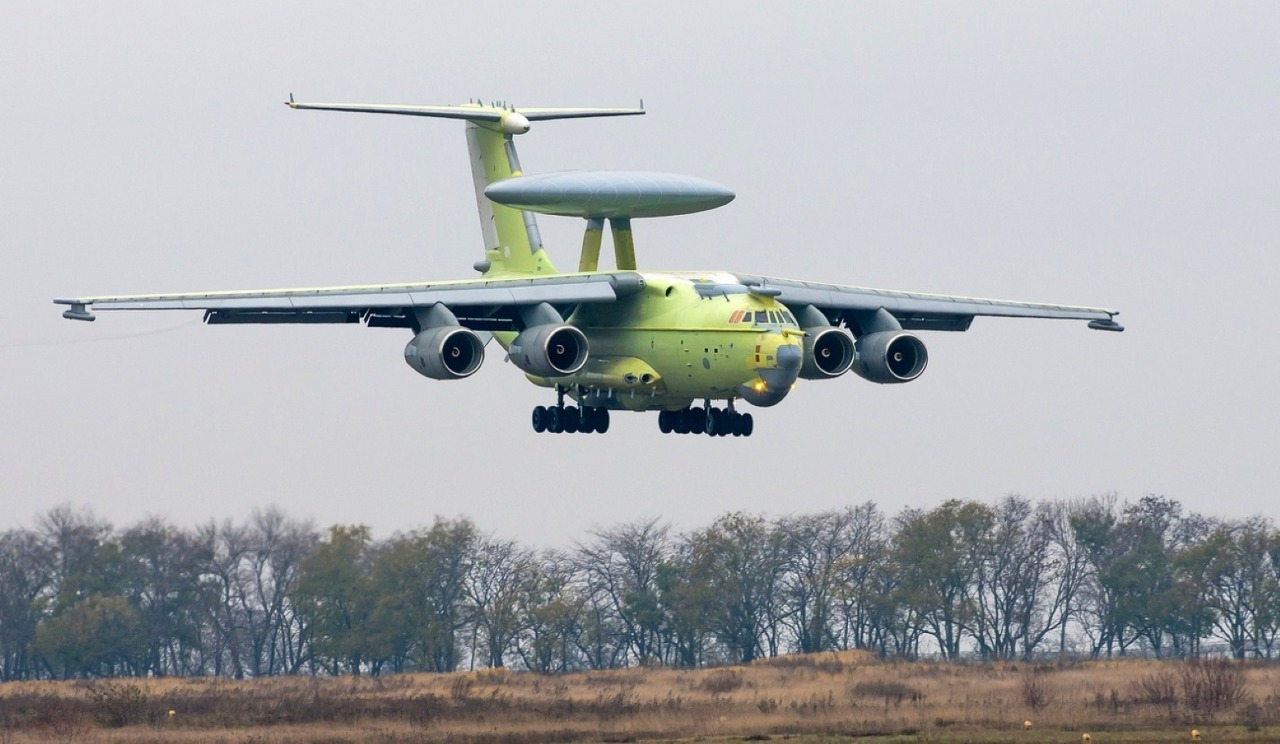
The A-100 AEW&C is a state-of-the-art airborne early warning system from Russia, featuring advanced radar technology. Central to its capabilities is the combination of Vega’s rotating phased-array antenna and the Premier 476 AESA radar. AESA radars are known for their ability to rapidly change the direction of radio waves, allowing simultaneous tracking of multiple targets from various directions.
This technological prowess enables the A-100 to identify aerial targets up to 600 km away and ground targets up to 400 km away, significantly enhancing airborne surveillance capabilities. Such an advanced system is essential for maintaining air superiority, allowing quick and precise responses to enemy maneuvers.
The A-100's introduction is expected to play a crucial role in strengthening Russia's air defense capabilities. By detecting enemy approaches early, it provides the foundation for effective response strategies. Consequently, Russian military operations can rely on more efficient and accurate intelligence to formulate their tactics.
KJ-2000 AEW&C: China’s Autonomous Development and Strategic Impact
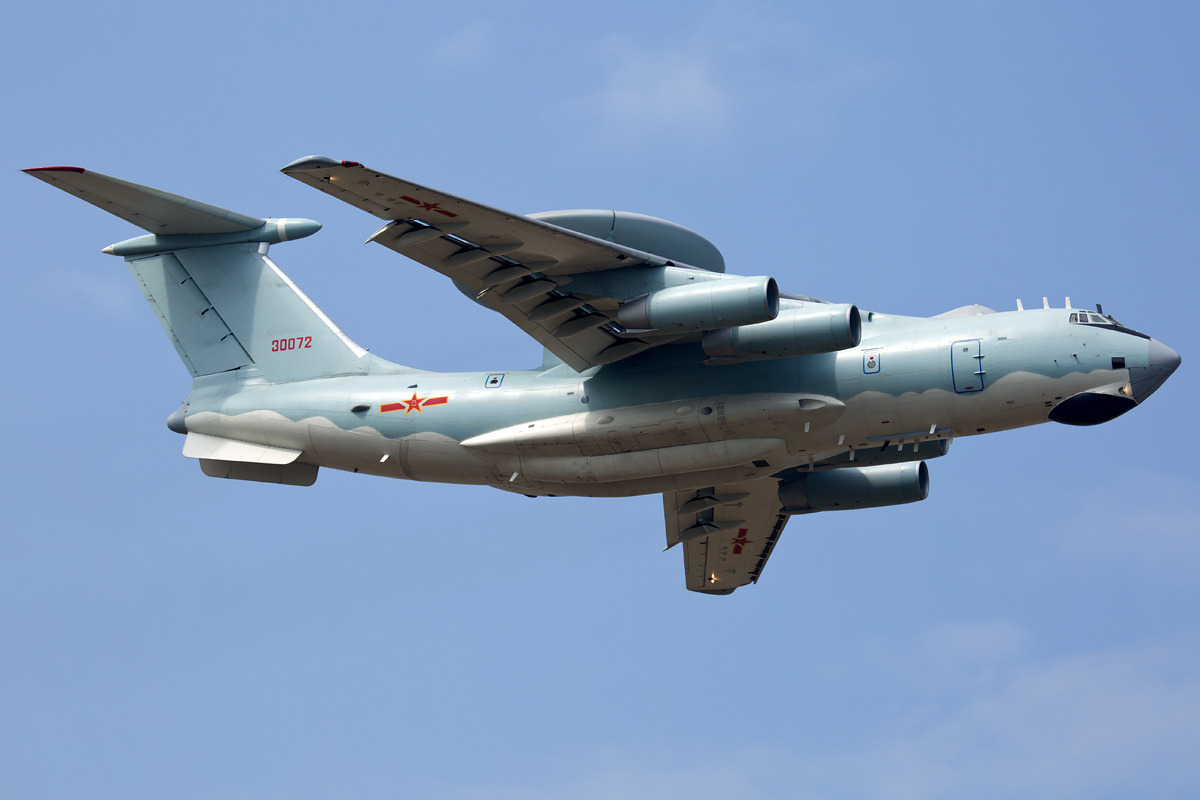
China’s KJ-2000 AEW&C, based on the IL-76 transport, represents a significant achievement in autonomous military technology. This aircraft employs a domestically developed AESA radar capable of detecting fighter-sized targets at distances of up to 470 km. The core of the KJ-2000’s capabilities lies in its Chinese-developed active phased-array radar, which substantially enhances airborne surveillance and target detection.
The KJ-2000, built on the reliable IL-76 platform, boasts high efficiency and reliability in performing early warning and surveillance missions. This technological self-reliance not only boosts China’s military independence but also strengthens its capability for independent intelligence gathering in future military operations.
The deployment of the KJ-2000 has significantly bolstered China’s airborne power and has substantial implications for regional military balance. As China continues to advance its military technologies, it solidifies its standing in the international military community.
A-50 AEW&C and A-100 AEW&C: Evolution of Russian Airborne Early Warning Capabilities
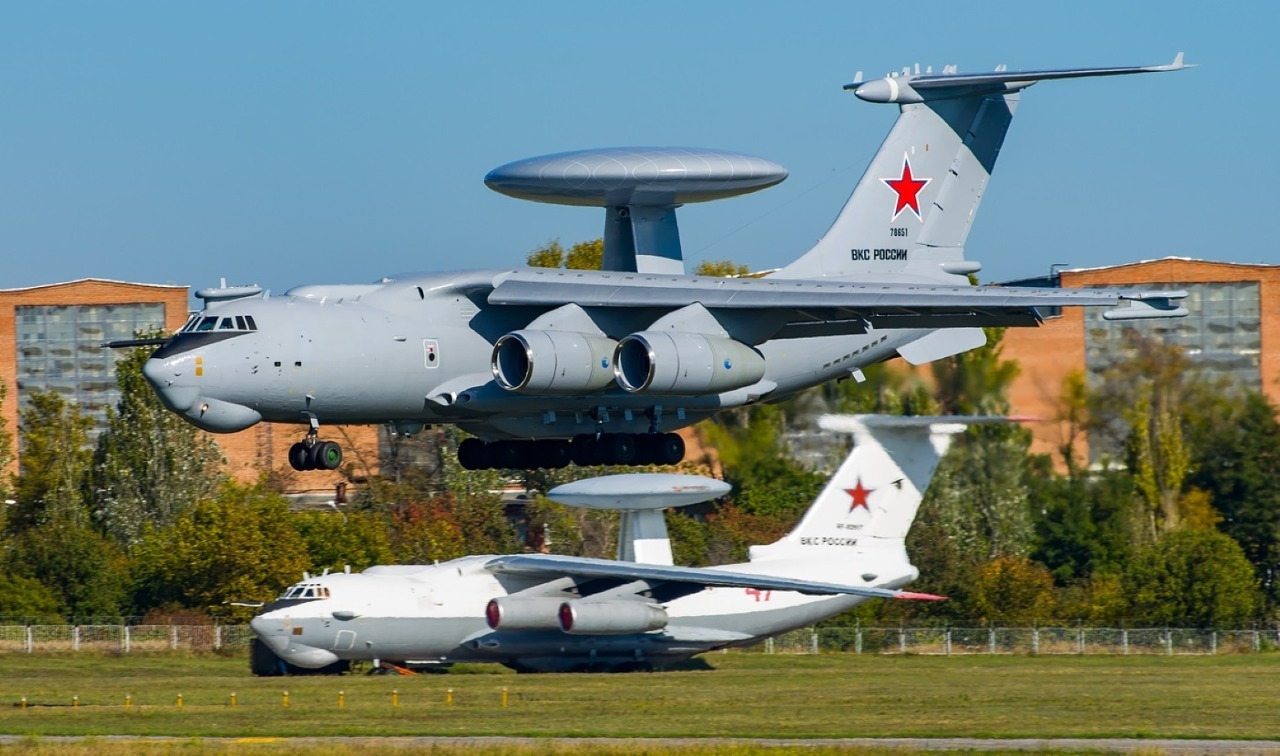
The older Russian A-50 AEW&C, based on the IL-76 transport, was an early example of an AEW&C aircraft, incorporating the latest technologies of its time. However, with the advent of more advanced systems like the A-100, the A-50’s limitations have become apparent. The A-50 played a vital role in early airborne surveillance and early warning, but the need for modernization led to the development of the A-100.
The A-100 AEW&C overcomes the technological constraints of the A-50, featuring cutting-edge radar systems that significantly enhance airborne surveillance capabilities. This upgrade is crucial for maintaining Russia’s strategic advantage in air defense, as the A-100 brings about a transformative improvement in the country's defense infrastructure.
Potential Russia-North Korea AEW&C Collaboration
Following Kim Jong-un’s recent visit to Russia, there are speculations that Russia might be aiding North Korea in developing its AEW&C capabilities. If Russia were to provide North Korea with systems like the older A-50 AEW&C, it could significantly enhance North Korea’s airborne surveillance and early warning capabilities. Such developments would have profound implications for the military balance on the Korean Peninsula and beyond.
If Russia supplies AEW&C expertise or hardware to North Korea, it could lead to a significant upgrade in North Korea’s military capabilities, posing new challenges for South Korean and US strategic responses. Enhanced AEW&C capabilities in North Korea would likely increase regional military tensions and necessitate adjustments in allied defense strategies.
Conclusion
The various AEW&C variants based on the IL-76 transport aircraft have significantly bolstered the airborne surveillance and early warning capabilities of countries like Russia and China. The A-100 AEW&C and KJ-2000 AEW&C incorporate the latest technologies, enhancing military readiness and strategic impact. Additionally, potential Russian collaboration with North Korea on AEW&C systems could alter the military dynamics in the region, presenting new challenges for international military strategy.
Keywords: IL-76, AEW&C, A-100, A-50, KJ-2000, airborne early warning, Russia, China, military technology, North Korea


