NASA's 'Nancy Grace Roman' Space Telescope
NASA's 'Nancy Grace Roman' Space Telescope
Introduction
NASA's latest space telescope project, the 'Nancy Grace Roman', is an infrared space telescope designed to unravel the mysteries of the universe. Scheduled for launch in May 2027, the telescope has a total development budget of approximately $3.2 billion. This project aims to achieve various scientific goals, including the exploration of black holes, the study of dark energy, and the search for exoplanets. The 'Nancy Grace Roman' space telescope, equipped with cutting-edge technology, promises to advance our understanding of the cosmos.
Key Features of the 'Nancy Grace Roman' Space Telescope
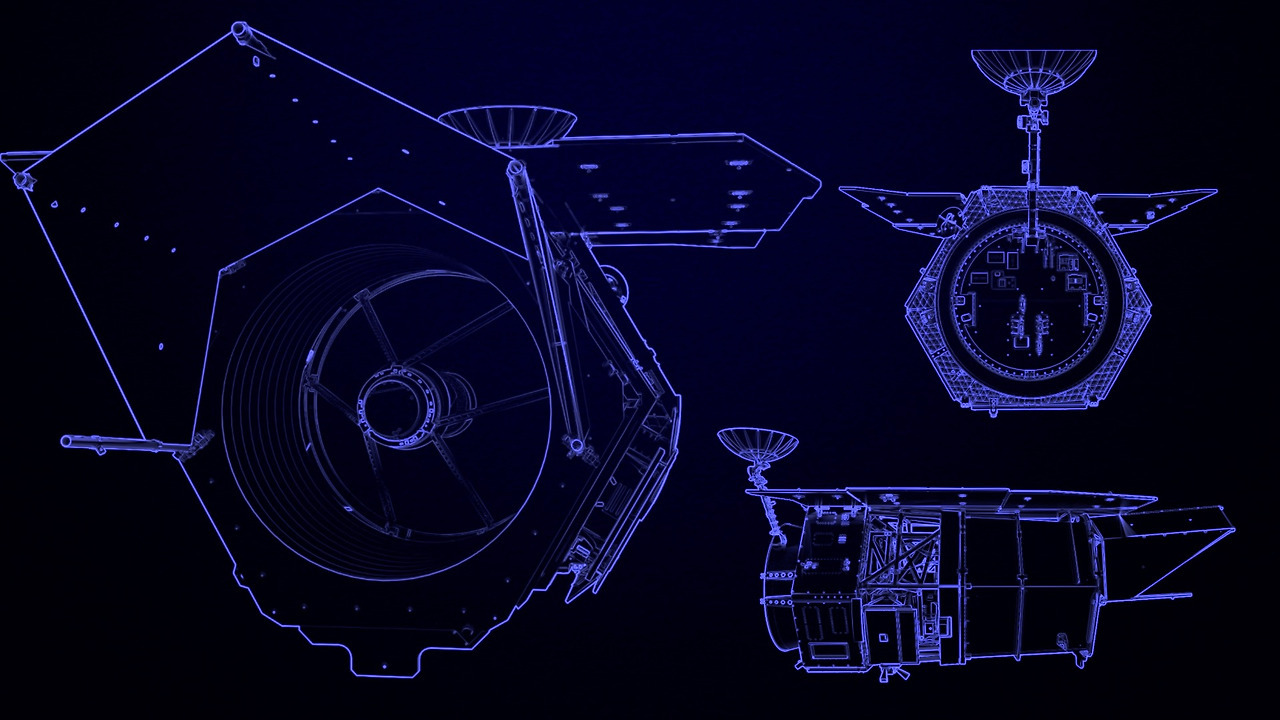
The 'Nancy Grace Roman' space telescope sets a new standard in space exploration with its advanced technology. Its main features include:
Weight and Equipment: The telescope weighs approximately 4166 kg and is equipped with a 2.4-meter primary mirror. It also features various advanced instruments, including the Wide Field Instrument (WFI).
Observation Location: The primary observation location is the second Lagrange point (L2), a point where the gravitational forces of the Earth and the Sun balance each other. This position allows for stable observations.
Operational Period: Development began in 2010 and continues to this day, with an expected operational period of at least 5 years and up to 10 years.
Scientific Goals: The telescope aims to explore primordial black holes, observe dark energy, and search for exoplanets. It is expected to play a crucial role in uncovering the mysteries of the universe.
Comparison with Other Major Space Telescopes
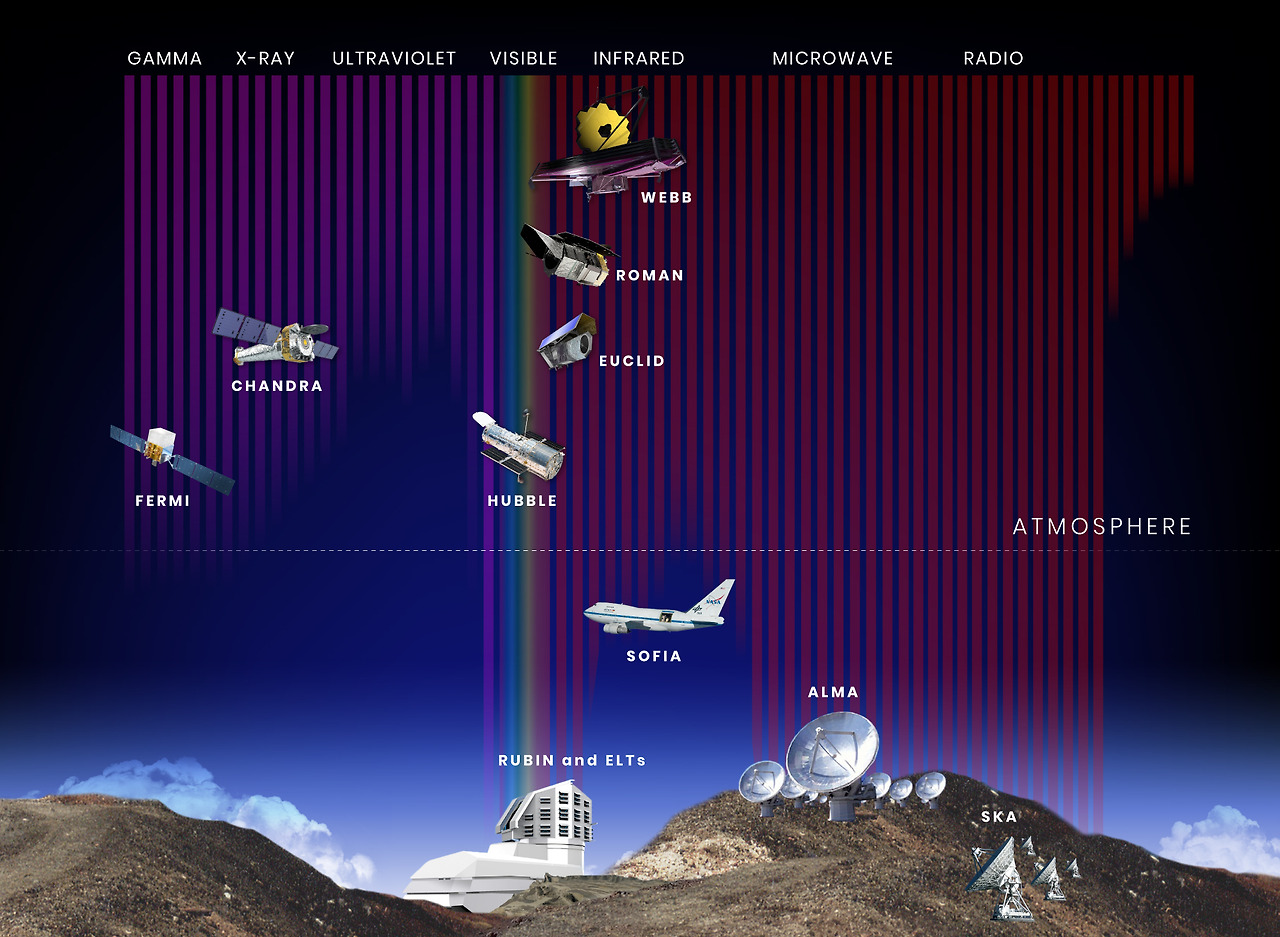
To better understand the 'Nancy Grace Roman' space telescope, it is useful to compare it with the Hubble and James Webb space telescopes. Here are the main features of each:
Hubble Space Telescope: Launched in 1990, the Hubble Space Telescope operates in the 0.2-1.7 micrometer range, observing ultraviolet and near-infrared light. It has a primary mirror diameter of 2.4 meters and has made numerous significant discoveries in visible and near-infrared astronomy.
James Webb Space Telescope: Launched in 2021, the James Webb Space Telescope observes in the 0.6-28 micrometer range, covering near-infrared, mid-infrared, and visible light. It features a 6.5-meter primary mirror, making it much larger than its predecessors. The James Webb excels in studying the early universe, primordial galaxies, and the atmospheres of exoplanets.
Nancy Grace Roman Space Telescope: Like the Hubble, the 'Nancy Grace Roman' has a 2.4-meter primary mirror but operates in the 0.5-2.3 micrometer range, observing visible and infrared light. It is particularly equipped with the Wide Field Instrument (WFI) to survey large areas of the sky, providing high-resolution images across a broad range of wavelengths.
Space Telescope Launch Plans by Major Countries
Many countries around the world are planning to launch various space telescopes, with their respective objectives:
United States: In 2025, the US plans to launch 'SPHEREx', a space telescope aiming to observe near-infrared light from low Earth orbit. SPHEREx will focus on mapping the entire sky in 96 color bands.
China: In 2026, China plans to launch 'Xuntian', a space telescope for observing infrared light from low Earth orbit. Xuntian is expected to be China's first infrared space telescope, contributing significantly to cosmic exploration.
Europe: In 2028, Europe plans to launch 'PLATO' into geostationary orbit to search for exoplanets. PLATO will focus on analyzing exoplanet atmospheres to understand their compositions and conditions.
Israel: In 2026, Israel plans to launch 'ULTRASAT' into geostationary orbit for observing near-infrared light. ULTRASAT will conduct detailed observations in the near-infrared range, enhancing our understanding of the universe.
Europe: In 2029, Europe also plans to launch 'Ariel' to the second Lagrange point (L2) for the exploration and analysis of exoplanets. Ariel will primarily focus on the atmospheric composition of exoplanets, studying a wide variety of environments.
Conclusion
The 'Nancy Grace Roman' space telescope represents a significant leap in space exploration. With its advanced technology, this telescope aims to achieve major scientific goals, including the study of black holes, dark energy, and exoplanets. Comparing it with other major space telescopes highlights its unique features and capabilities. Additionally, the global plans for launching space telescopes indicate a broadening scope of cosmic exploration. The successful launch and operation of the 'Nancy Grace Roman' space telescope hold the promise of uncovering the deep secrets of the universe, one discovery at a time.
Keywords: NASA, Nancy Grace Roman, space telescope, infrared observation, black hole exploration, dark energy, exoplanets, Hubble telescope, James Webb telescope, space exploration


